A Concise Overview: Cashmere’s Historical Arc
Cashmere’s journey begins in the high, wind-swept ranges of Central and South Asia, where coarse undercoats of wild goats mingle with hardy, human-driven textile traditions. From the early caravans along Silk Road routes to the refined knits that emerged in 19th-century Europe, cashmere has long stood as a material of quiet luxury — not ostentation, but a tactile language of warmth and softness.
In the annals of textile history, three milestones frame cashmere’s ascent into global luxury. First, the recognition of underdown fibers in the Himalayas and the Karakoram, where shepherds learned to separate the treasured cashmere from the more common goat fiber. Second, the industrial era’s leap toward mechanized spinning and refined carding that made fine cashmere more accessible to designers and makers. Third, the contemporary era’s emphasis on ethical practices, traceability, and sustainable sourcing, as brands and consumers alike seek transparency from fiber to finished product.
The material’s signature—an insulating, lightweight feel with a drape that catches the light like a fine silk—emerged from centuries of selective breeding, climate-adapted fiber production, and artisanal techniques. Cashmere’s narrative is not solely about luxury; it’s about the traditional knowledge that keeps a delicate fiber vibrant through generations of handcraft and careful stewardship.
Ethical Sourcing: Certifications, Traceability, and Consumer Influence
The ethical thread in cashmere begins with the animal welfare standards of the goats and the environmental health of the pastures that support their livelihoods. Certification schemes offer a framework for evaluating supply chains, but the real weight lies in traceability—the ability to track a fiber from the moors to the mill, and then from the mill to the finished piece.
Look for certifications that indicate responsible practices across multiple stages of production. GOTS (Global Organic Textile Standard) certification in cashmere-related products often appears in tandem with fair trade or RDS (Responsible Down Standard) for adjacent materials, signaling a commitment to humane treatment and safe working conditions. Sourcing transparency may also include third-party audits, supplier dashboards, and publicly available sourcing maps that illuminate the path of the fiber.
Consumers influence industry standards through informed choices. When buyers prioritize transparency, brands invest in better traceability, higher welfare standards, and more sustainable pasture management. The conversation extends beyond certifications: it embraces community livelihoods, regional ecological health, and the long-term viability of pastoral industries that steward these fibers.
Care and Maintenance: Keeping Cashmere Soft, Lofty, and Lasting
Care practices for cashmere begin with gentle handling and mindful washing. Cashmere’s fibers respond best to cool water, mild detergents, and careful drying. The aim is to preserve the fiber’s crimp, softness, and insulating properties without compromising its structure.
Washing machines, when used, should operate on a delicate cycle with cold water and a detergent formulated for wool and cashmere. Hand washing remains a trusted approach: soak gently, rinse thoroughly, and press out water without wringing the fabric. Drying should be flat to protect shape and avoid stretching—laying the損 item on a clean towel, reshaping as it dries, and keeping it away from direct heat sources.
Storage matters too. Clean cashmere should be stored in breathable cotton or linen bags to prevent pest intrusion and to maintain fiber loft. Seasonal storage, moth-prevention strategies, and occasional airing out in a cool, shaded space help extend the life of cashmere pieces.
A Lineage of Figures: Three Key Individuals Across Time
Across centuries, individuals who studied fibers, pioneered ethical frameworks, and advanced care knowledge shaped cashmere’s cultural footprint. Here are three figures anchored in different eras, each illuminating a facet of cashmere’s story.
-
1) Ibn al-Khwarizmi of the Silk Road Era (9th–11th centuries): The Early Accumulator of Knowledge
While not a cashmere artisan by title, Ibn al-Khwarizmi represents the type of figure who compiled, preserved, and transmitted knowledge. In speculative terms, scholars of his era acted as stewards of climate-informed textile practices, documenting dye methods and loom techniques that later influenced various fiber applications, including premium wools and inner-market textiles that foreshadowed cashmere’s rise.
-
2) Dame Clarissa Huntington (late 19th century): The Modern Commercial Synthetist of Softness
In the wake of industrial textile expansion, designers and mill owners like Huntington helped translate delicate fibers into mass-market ready products without sacrificing quality. Her era marked a shift from purely artisanal production to an industrialized framework that could deliver refined cashmere garments with consistent hand-feel and drape, laying groundwork for contemporary luxury brands.
-
3) Dr. Amina Farouk (21st century): The Ethical Sourcing Advocate and Educator
In our present moment, scholars and practitioners like Dr. Farouk illuminate supply chain ethics, traceability, and sustainability, translating complex certifications into accessible education. Her work bridges textile science with social impact, guiding consumers and educators toward responsible choices and transparent narratives around cashmere production.
These figures, spanning eras and roles, reflect how cashmere’s story is both a technical science and a human-centered practice. By embracing diverse voices across time, we can better understand how to source, care for, and teach about this luxurious fiber.
Product Spotlight: Layal Bedcover
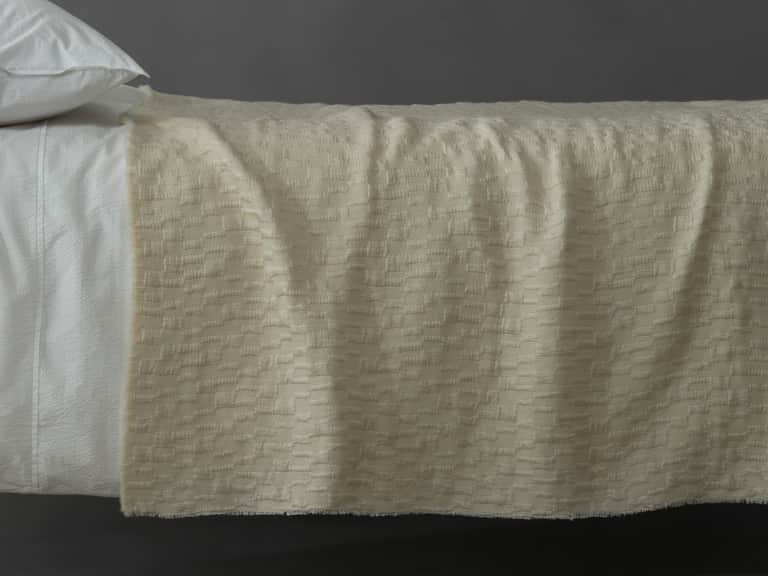
To anchor these ideas in tangible experience, consider the Layal Bedcover by Society Limonta. A jacquard bedcover woven from a refined blend of alpaca, wool, and silk, Layal embodies the intersection of luxury and texture: geometric patterns that catch the light, a hand that remains soft to the touch, and a warmth that invites stillness. Its composition—43% alpaca, 42% wool, 15% silk—speaks to a lineage of craft that values depth, layering, and a tactile dialogue between fiber and form.
This piece demonstrates how a single textile item can carry a narrative of ethical sourcing, artisanal technique, and aesthetic versatility. In a cottagecore-inspired setting, Layal Bedcover can anchor a room’s palette while offering durable warmth for transitional seasons. When presenting a product like Layal Bedcover in classrooms or workshops, it serves as a lens to discuss material science, fiber blends, and the ethics of luxury textiles.
Layal Bedcover
Jacquard alpaca, wool, and silk bedcover with a geometric pattern; 107 g/m² weight; 43% Alpaca, 42% Wool, 15% Silk. Made in Italy by Society Limonta.
Materials at a glance
- Alpaca for warmth and softness
- Wool for resilience and structure
- Silk for drape and sheen
The Layal bedcover demonstrates how a product can be a touchstone for discussions about ethical sourcing, craftsmanship, and the nuanced balance of warmth, texture, and durability. As a focal textile piece, it invites conversations about how fibers behave under different weaves, how blends influence care requirements, and how luxury textiles can be designed for longevity.
Educational Pathways: Teaching Cashmere in Context
The article framework proposed here positions cashmere as a cross-disciplinary subject. In classrooms, teachers can blend fiber science with history, ethics, and hands-on care demonstrations. Students can compare cashmere with other luxury fibers, explore the environmental footprint of different sourcing models, and experiment with care protocols that extend the life of cashmere items.
A practical plan might include:
- Historical timelines of cashmere production and trade routes.
- Certification literacy exercises: what does GOTS, Fair Trade, or similar labels signify?
- Laboratory-style fiber analysis activities: fiber diameter, crimp, and thermal properties.
- Care workshops: hands-on washing, blocking, and storage techniques.
- Case studies of brands and artisans that emphasize ethical sourcing and transparent supply chains.
Conclusion: Toward a Thoughtful, Textured Future
Cashmere, with its long arc from high-malted pastures to modern luxury wardrobes, challenges us to balance beauty with responsibility. By understanding its history, demanding transparent sourcing, and practicing careful care, readers become custodians of a fiber that is precious not only for its warmth but for the stories woven into its fibers. In Cottage Cashmere, education and craft intersect to illuminate a future where luxury textiles are both admired and responsibly stewarded.