Nursery textiles · Materials and standards
Choosing Organic Nursery Textiles: What Coyuchi’s Certifications Tell You
A certification label can offer a useful trail through the complex world of textile production. But it is only one part of the story. When choosing a baby sleep sack, families can read that label alongside the fiber, construction, closures, care instructions, and the safety guidance that applies to infant sleep.
Published October 29, 2026
In a nursery, textiles are close to the smallest sleeper in the house. Cotton touches skin; seams and fasteners meet constant movement; a garment may be washed again and again. For caregivers considering organic nursery textiles, the questions are practical as well as ethical: What is the fabric made from? What does a certification actually verify? How might the item be cleaned and used over time?
Those questions matter because terms such as organic, responsibly made, and fair trade can point toward different aspects of production. A product may carry a recognized certification, but no single seal tells a complete story about a textile’s environmental footprint, the conditions of every worker in its supply chain, or whether a particular design is suitable for a specific child and sleep setting.
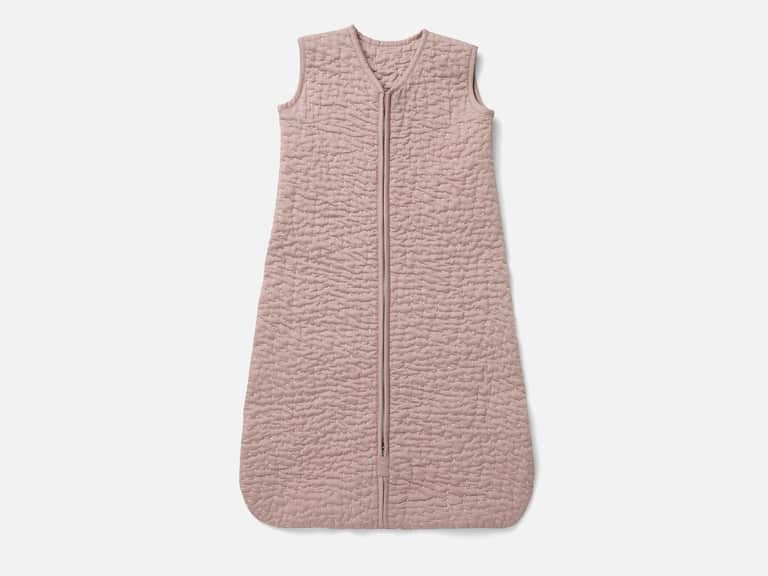
Coyuchi’s Pebbled Handstitched Organic Snuggle Sack offers a useful example for learning how to read product information. Its listed details include 100% certified organic cotton sateen, GOTS and Fair Trade Factory certification, cotton grown and woven in India, handstitched texture, and a covered front zipper. These details help frame a more informed assessment—but they should be understood individually, not treated as a universal guarantee of every quality a family might care about.
What GOTS certification is designed to address
The Global Organic Textile Standard, commonly known as GOTS, is a textile-processing standard for products made with organic fibres. It is designed to cover more than the origin of the raw fibre. Depending on the product and its certification scope, the standard addresses environmental and social criteria across textile processing and manufacturing, including restrictions on certain inputs and requirements for handling certified materials.
That broader scope helps distinguish GOTS from a label that refers only to the agricultural production of cotton. A textile begins as a crop, but it becomes fabric through several stages: ginning, spinning, knitting or weaving, dyeing or finishing, and assembly. Each stage can involve different facilities and processes. A textile standard can provide a framework for assessing parts of that chain rather than leaving the word “organic” to stand alone.
Certification is also a system of verification, not merely a marketing description. The precise claim depends on the product’s label and the applicable certification rules. Shoppers who want to understand a particular item should check the current product listing, packaging, and certification information rather than assuming that every item from a brand has identical credentials or scope.
For a nursery textile, GOTS can therefore be a meaningful signal about the certified material and processing requirements. It does not, however, answer every question. It is not a performance test for softness, a promise that a garment will fit every baby, a measure of how long it will last in a particular household, or a substitute for following safe-sleep recommendations.
What Fair Trade certification adds—and what it does not
Fair Trade certification addresses a different set of concerns. In the product information for the Coyuchi snuggle sack, the wording refers to Fair Trade Factory certification. That is distinct from GOTS, even when both appear in the same product description. The first relates to standards associated with factory production and worker conditions; the second concerns organic textile processing and related environmental and social criteria.
The two labels can complement each other because they focus attention on different parts of a product’s story. One does not replace the other, and neither should be read as proof of every claim a shopper might wish to verify. Certification names can refer to different schemes, scopes, and stages of production. For that reason, precise wording matters: “Fair Trade Factory Certified” is more informative than a broad, unexplained use of “fair trade.”
It is also helpful to distinguish standards from outcomes. A certification establishes requirements and verification processes within a defined system; it does not mean that all conditions in global textile supply chains are identical or that all impacts have disappeared. A considered shopper treats the seal as evidence to investigate, not as a reason to stop asking questions.
When reading a product page, look for the exact certification name, the stated certified material or facility, and any supporting details about origin and manufacture. If the description is unclear, the brand’s current certification information may help clarify what the label covers. Avoid extending a claim beyond what the available information says.
A closer look at the Pebbled Handstitched Organic Snuggle Sack
The Coyuchi Pebbled Handstitched Organic Snuggle Sack is described as being made from 100% certified organic cotton sateen. Sateen is a weave structure, not a fibre. Here the fibre is cotton; the weave contributes to the fabric’s smooth surface and drape. That distinction is useful when comparing products: fibre content tells you what the textile is made from, while construction describes how those fibres have been formed into fabric.
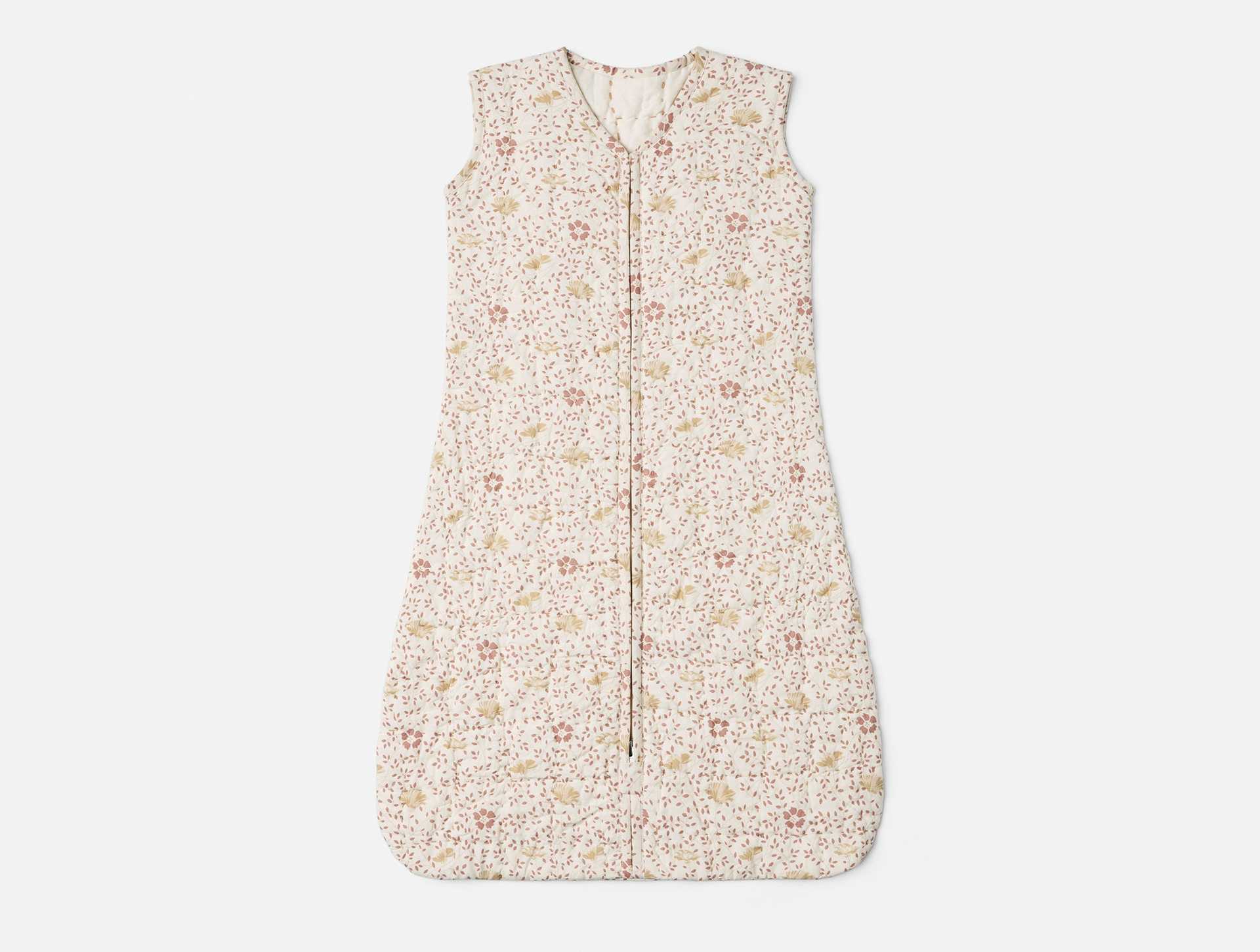
The product description also identifies handstitched texture and a covered front zipper. These are construction details with direct relevance to daily use. A zipper can make dressing and changes more straightforward, while a covered finish means the closure is designed with an additional fabric layer. Families should still inspect the garment and follow its specific use instructions. A feature described on a product page does not remove the need to check fit, condition, and suitability for the child.
The listed origin is India, where the cotton is grown and woven. Origin information adds useful context, but it should be read precisely: it does not necessarily identify every place involved in farming, processing, dyeing, sewing, or final distribution. Supply chains can cross borders and involve multiple facilities. A product description gives a starting point for understanding those stages, not always a complete map of them.
For care, the listed instructions call for a cold machine wash on a gentle cycle and tumble drying on low; the product information also mentions warm ironing if desired. The exact care label supplied with the item should take precedence, since instructions can vary by product version or be updated. Gentle handling may help preserve fabric and stitching, while clear care directions make it easier to judge whether a textile fits a household’s routine.
Organic cotton is a material detail, not a complete lifecycle account
Choosing organic cotton may reflect a preference for fibre produced under defined agricultural standards. Yet a complete lifecycle includes more than the field. Water and energy use, processing chemistry, dyeing, transportation, packaging, durability, laundering, and end-of-life options all influence a textile’s broader footprint. The impact of each stage can vary by location, technology, and the way a product is used.
That complexity is not a reason to dismiss certification. Rather, it is a reason to understand its boundaries. GOTS can provide a structured set of requirements for certified textile production, while a separate product page may provide details about fibre, origin, and care. Neither necessarily supplies a full lifecycle assessment for the item. If a brand makes a broader environmental claim, look for the evidence and scope behind that claim.
Durability is another part of the equation. A textile used frequently and cared for according to its instructions may remain in service longer than one that quickly wears out or is difficult to maintain. Construction, seams, closures, fabric weight, and repairability all influence usefulness. A product that can be washed in a way that suits a family’s routine may be more practical than a delicate alternative that is rarely used.
Families may also consider what happens after a child outgrows a sleep sack. Passing it along, donating it where accepted, or using a textile-reuse program can extend its useful life, depending on condition and local guidance. This does not erase production impacts, but it can help keep a well-maintained item in use. Any secondhand infant textile should be checked carefully for wear, damage, missing parts, and applicable safety guidance.
Read the product beyond the seal
A certification is easiest to interpret when set beside concrete product details. Before choosing nursery textiles, consider the following points:
- Fibre composition: Is the item 100% cotton, a blend, or a different material? Check whether the certified claim applies to the whole textile or a stated component.
- Fabric construction: Is the fabric knit, woven, sateen, or another construction? These descriptions help explain how a textile may feel, stretch, drape, and wear.
- Manufacturing information: Does the listing identify where the material was grown, woven, knitted, or assembled? Treat each location claim as specific to the stage it describes.
- Certification wording: Are GOTS and Fair Trade Factory certification named explicitly? What product, material, or facility does the claim cover?
- Closures and finishing: Are zippers, buttons, seams, and edges described clearly? Check that they are intact and follow the manufacturer’s instructions for use.
- Care instructions: Can the item be maintained using the methods available to your household? Follow the care label, and avoid assuming that all organic cotton items can be washed alike.
- Fit and product guidance: Does the manufacturer provide sizing or use information? Follow current guidance for the child’s age, size, and the specific product.
These questions make shopping more deliberate without turning it into a hunt for a perfect object. There is rarely a single textile that answers every concern about materials, labour, cost, care, and environmental impact. The goal is to understand what is known, recognize what remains unspecified, and select an item suited to the family’s priorities.
Keep safe-sleep guidance separate from materials claims
Organic fibres and third-party certifications concern material and production standards. They do not establish that a sleep product is safe for every infant in every situation. Caregivers should follow current safe-sleep guidance from qualified public-health authorities and consult a healthcare professional when they have questions about an individual child.
In particular, a product’s marketing language should not replace guidance on the sleep environment. A sleep sack is not a blanket, and its intended use, sizing, and instructions should be followed. Check the product label and manufacturer guidance, and make sure the child can move comfortably and that the garment fits as intended. Do not modify closures or use a damaged item in a way contrary to its instructions.
Temperature and layering deserve attention too. Natural fibres may have useful tactile or moisture-handling characteristics, but no material label can determine what a baby should wear in every room or climate. Consider the indoor conditions and the product’s stated use, and watch for signs that the child may be too warm or too cool. When in doubt, use trusted, up-to-date health guidance rather than inferring safety from a certification mark.
This distinction helps prevent a common misunderstanding: a textile can be certified organic and still require careful, appropriate use. Material credentials are valuable information, but they are not a substitute for product instructions or safe-sleep practices.
Care is part of the textile’s story
Nursery fabrics live a busy life. They are washed after spills, dried between routines, and handled repeatedly. Care instructions are therefore more than a footnote. They indicate how the manufacturer expects the fabric and its details to be maintained, and whether that routine fits the realities of a home.
For the Pebbled Handstitched Organic Snuggle Sack, the listed guidance specifies cold washing on a gentle cycle and low-temperature tumble drying. Use the care label on the item as the final reference. Avoid stronger settings simply for convenience, since excessive heat or rough handling can affect fabric, embroidery, and closures. Fasten closures as directed before laundering, and separate garments as appropriate for colour and fabric care.
Regular inspection is useful. Look for loose stitching, damaged fasteners, thinning fabric, or other wear before each period of use. If a closure no longer functions as intended or the material is damaged, follow the maker’s advice and do not rely on a certification to compensate for deterioration.
For other nursery textiles, care needs may differ. A quilted cotton item, a knit layer, and a sateen sleep sack are not interchangeable in construction or maintenance. The category includes items made from organic cotton with different weaves and finishes; the description of one product should never be used as a care rule for another.
A practical decision framework for families
When a product combines organic material claims and factory-related certification, it can be tempting to treat the label as a final verdict. A more useful approach is to move through the evidence in stages.
- Start with the child and the intended use. Confirm that the item is designed for the relevant age and size, and follow current safe-sleep guidance.
- Read the composition. Identify the fibre and fabric construction. For example, cotton sateen describes cotton in a particular woven structure; the terms do not mean the same thing.
- Interpret each certification separately. Note whether the claim is GOTS, Fair Trade Factory, or another standard, and avoid assuming one covers everything the other covers.
- Check the production details. Record what the listing says about origin and manufacturing, while recognizing that a short description may not name every supply-chain stage.
- Assess everyday practicality. Consider closures, fit information, laundering, and how often the textile will be used.
- Decide what information is still missing. If an important claim is vague, consult current documentation or ask the brand for clarification before relying on it.
This method applies well beyond sleep sacks. It can help families compare sheets, blankets, clothing, and other nursery textiles without confusing a particular environmental or labour credential with overall product safety or quality.
The value of a careful label reader
Certification marks can make an intricate supply chain more legible. GOTS points to requirements for organic textile processing and related environmental and social criteria. Fair Trade Factory certification points toward a distinct set of factory-related standards. Used together, the labels can help families ask more informed questions about cotton, processing, and production conditions.
The Coyuchi Pebbled Handstitched Organic Snuggle Sack illustrates why the details around a certification matter. Its listed organic cotton sateen, Indian origin, handstitched texture, covered zipper, and care instructions each tell a different part of the product story. A family can weigh those details alongside its own priorities and the child’s needs.
No single label can describe every impact from field to finished garment, and no material credential replaces safe-sleep guidance. But informed reading narrows the distance between a comforting claim and a verifiable detail. In a nursery, where textiles are chosen for daily contact and repeated use, that distinction is worth noticing.